In a Las Vegas Grand Prix that defied convention, Max Verstappen showed why his claim to greatness rests on something more enduring than championship titles.
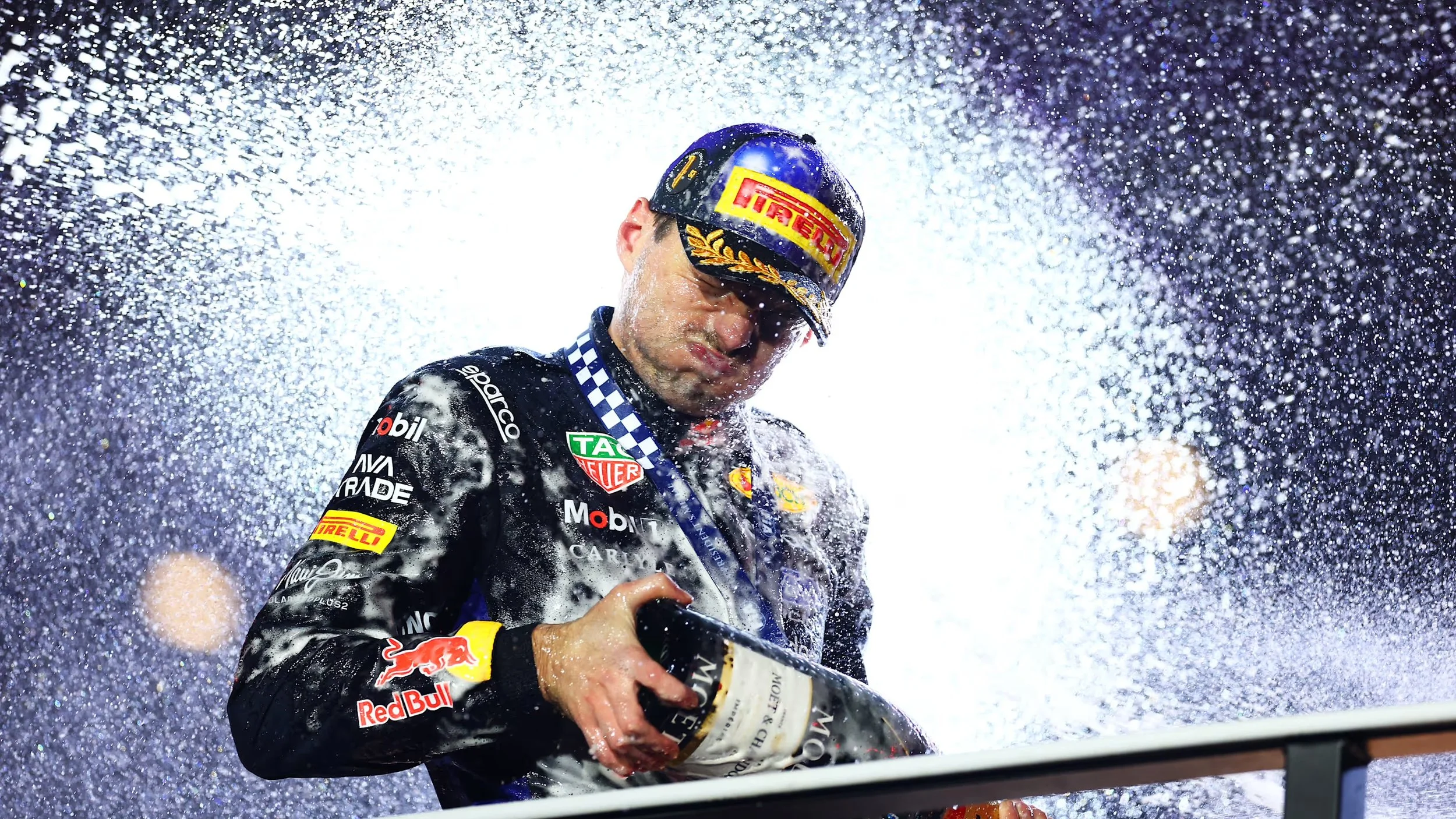
I set my alarm for 5:30 a.m. on Sunday to watch the Las Vegas Grand Prix. I expected an entertaining race. What I hadn’t anticipated was one of the most extraordinary displays of competitive instinct I have witnessed in Formula 1.
Fifty laps. Thirty-five changes of the lead. A succession of overtakes, counterattacks and tactical calculations that made the conventional notion of controlling a race almost meaningless.
Even Max Verstappen, a driver who has experienced practically every conceivable form of pressure in motorsport, appeared astonished. Speaking afterwards, he described the contest as “something that I’ve never seen before in Formula 1”.
It was a remarkable admission from someone who rarely appears surprised by anything that happens behind the wheel.
Yet amid the unpredictability, one thing remained remarkably consistent: Verstappen’s determination to win.
And as I watched him repeatedly reclaim positions, respond to challenges and anticipate the moves of those around him, I found myself considering a question that extends well beyond motorsport.
What separates exceptional talent from genuine greatness?
Formula 1 is often described as the ultimate intersection of human performance and technological innovation. It is a discipline in which engineering, aerodynamics, data and strategy operate within margins so narrow that a fraction of a second can determine the outcome of an entire weekend.
Yet even in a sport increasingly governed by sophisticated technology, there remains something that cannot be entirely engineered: racecraft.
It is difficult to quantify, even harder to replicate and, in my view, the defining characteristic of Max Verstappen.
Racecraft is not simply the ability to overtake another driver. It is the capacity to interpret an evolving situation at extraordinary speed, anticipate an opponent’s intentions, understand the limits of one’s machinery and make decisions that others might not even recognise as possibilities.
Las Vegas provided an unusually vivid demonstration.
The characteristics of the circuit, combined with the energy-management demands of Formula 1’s 2026 regulations, produced an extraordinary slipstream effect. Drivers could overtake one another only to find themselves vulnerable to an immediate counterattack. Track position became temporary, and the conventional advantage of leading the race was repeatedly undermined.
George Russell challenged Verstappen throughout the opening stages, frequently moving ahead before the Dutchman reclaimed the position. Later, newly crowned world champion Kimi Antonelli joined the contest, creating an increasingly complex battle in which the smallest tactical miscalculation could prove decisive.
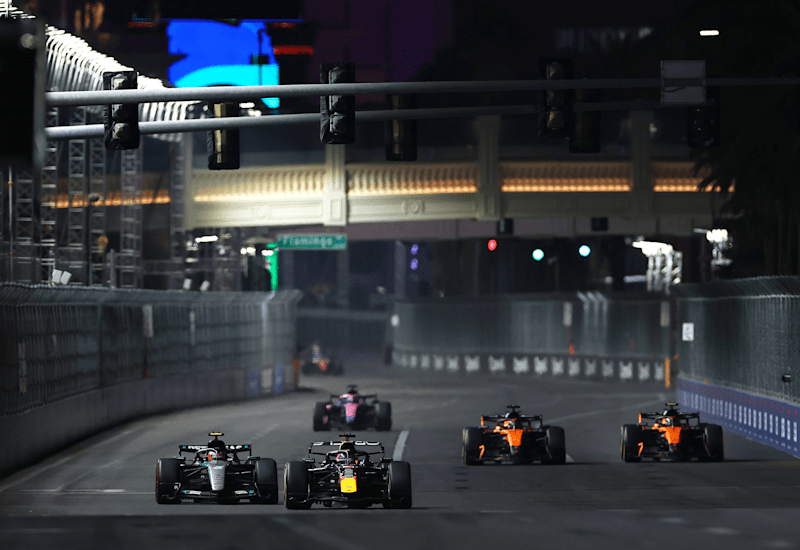
Verstappen’s response was fascinating.
He was not merely reacting to what happened around him. He was actively assessing the mechanics of the battle, questioning energy deployment over team radio and anticipating how the final lap might unfold.
There is a considerable difference between driving quickly and understanding how to win a race.
Verstappen possesses both.
I have never made a secret of my admiration for Max Verstappen.
And while I recognise the extraordinary achievements of other Formula 1 champions, I believe there is something fundamentally different about his competitive character.
He is ruthless.
Not in the superficial sense of being aggressive for the sake of aggression, but in his unwillingness to accept that a position, an opportunity or a victory has been lost until every available possibility has been exhausted.
He does not back down easily. He does not appear intimidated by reputations, championships or expectations. And he seems almost entirely uninterested in making his competitors comfortable.
There is something refreshing about that.
In an age when professional athletes are increasingly expected to be polished public personalities, Verstappen remains remarkably uncompromising. His temperament can be confrontational, his reactions occasionally controversial and his approach to competition divisive.
But greatness has never been synonymous with universal approval.
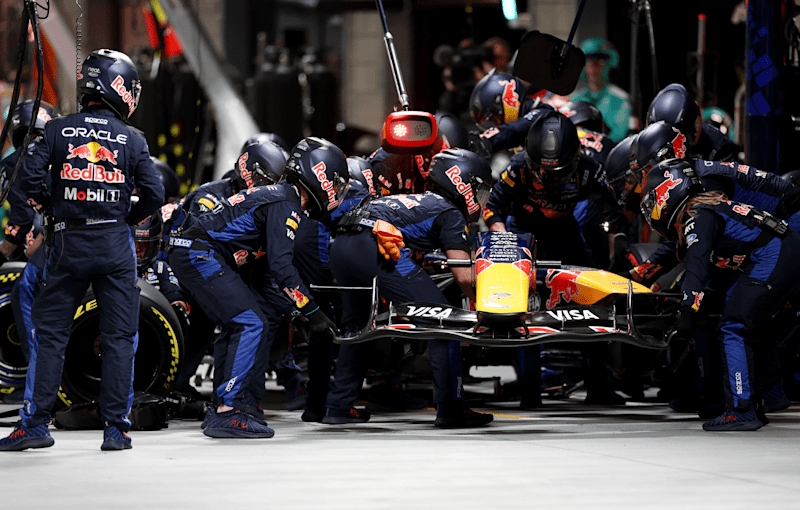
Nor should ruthlessness be confused with recklessness. Verstappen’s career has included moments when his aggression has attracted legitimate criticism. What distinguishes his finest performances, however, is the discipline that accompanies his competitive instinct.
The ability to attack without losing sight of the wider contest. To recognise when to defend and when to counterattack. To remain sufficiently composed to make the correct decision when everyone around you is operating at the limit.
That is the quality I find most compelling.
And it is why I believe Verstappen possesses a level of racecraft that is exceptionally rare, even among the most accomplished drivers on the current grid.
Debates about Formula 1’s greatest drivers tend to become exercises in arithmetic.
Seven world championships for Michael Schumacher. Seven for Lewis Hamilton. Four for Verstappen.
The statistics matter. Championships are earned over entire seasons, and sustained success demands an extraordinary combination of ability, consistency, machinery and organisational excellence.
But numbers alone cannot settle the question of greatness.
Formula 1 has never offered its competitors identical circumstances. Different generations have raced under different regulations, technological constraints and competitive conditions. Even within the same era, the performance of a driver’s machinery can substantially influence what is possible.
Hamilton’s achievements are formidable and deserve recognition. Antonelli, meanwhile, has already demonstrated exceptional ability by securing the 2026 world championship at just 20 years old.
But neither fact changes my assessment of Verstappen.
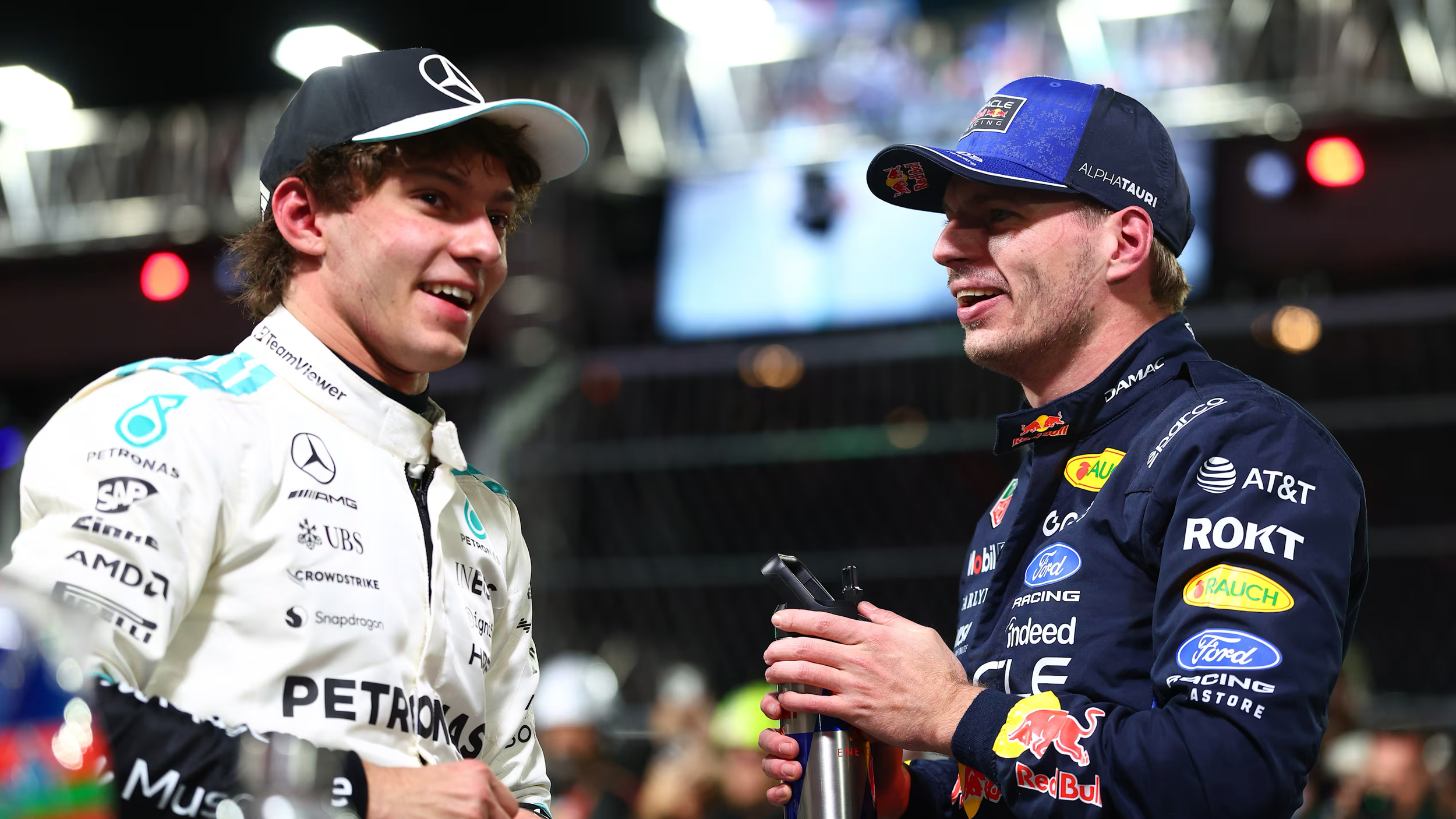
For me, his racecraft belongs in the same conversation as Ayrton Senna and Michael Schumacher.
This is not a claim that their driving styles are identical, nor that one can establish a definitive hierarchy across generations. Rather, it is a recognition of a particular competitive quality that all three have demonstrated: an almost instinctive understanding of racing, combined with an extraordinary conviction in their ability to prevail.
Senna’s qualifying brilliance and instinctive precision became defining elements of his legacy. Schumacher’s relentless preparation, technical understanding and competitive intensity helped establish a new benchmark for modern Formula 1.
Verstappen, in his own way, represents a continuation of that tradition.
He combines an extraordinary sensitivity to the behaviour of a racing car with the capacity to make split-second judgements under pressure. His greatest drives often appear effortless, although that apparent simplicity conceals an exceptionally complex process of calculation and execution.
The distinction is important.
Talent may provide the foundation for greatness. But instinct, judgement and the relentless refinement of one’s abilities determine how far that talent can be taken.
What makes Verstappen particularly interesting is that his competitive philosophy has implications far beyond Formula 1.
In business, the creative industries and almost every field where exceptional performance is demanded, there is a tendency to celebrate ambition while remaining somewhat uncomfortable with the characteristics required to sustain it.
We admire conviction, provided it is sufficiently diplomatic. We celebrate originality, provided it does not challenge established conventions too aggressively. We encourage people to pursue excellence, while frequently expecting them to remain agreeable in the process.
Yet the individuals who fundamentally redefine standards are rarely those most concerned with consensus.
They tend to possess an unusual degree of conviction, an intolerance for mediocrity and a willingness to pursue an objective long after others have accepted the prevailing limitations.
Of course, conviction without judgement can become stubbornness. Ruthlessness without discipline can become destructive. And the pursuit of excellence is not an excuse for treating others poorly.
The distinction lies in how these qualities are applied.
At his best, Verstappen demonstrates what happens when exceptional ability is supported by an equally exceptional competitive mentality.
He is not simply determined to win. He appears determined to understand every possible route to winning. His approach suggests that excellence is not merely an outcome, but a continuous process of observation, adaptation and improvement.
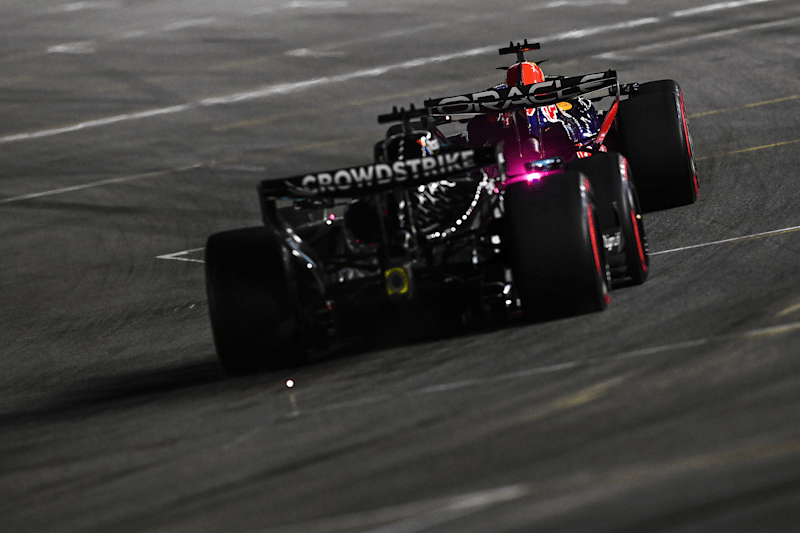
The previous season offered perhaps an even more compelling illustration of Verstappen’s competitive resolve. Following the 2025 Dutch Grand Prix, he trailed championship leader Oscar Piastri by 104 points. By the season finale in Abu Dhabi, that deficit had been reduced to almost nothing. Verstappen won the final race, but Lando Norris secured the championship by just two points.
It was an extraordinary recovery, made possible by a resurgence in Red Bull’s performance, Verstappen’s relentless consistency and the difficulties encountered by McLaren. Five victories in eight Grands Prix between Monza and Qatar had transformed what appeared to be a settled championship into a contest decided at the final race.
For a driver who had dominated the 2023 season with 19 victories from 22 races, the contrast was revealing. Dominance had already established his credentials. The 2025 comeback demonstrated something arguably more significant: his capacity to remain a formidable competitor when the competitive advantage no longer belonged to him.
There is a temptation to judge sporting greatness principally by its most successful seasons. Yet the more revealing measure may be what remains when the machinery, circumstances and championship standings are no longer in a driver’s favour.
Antonelli has claimed the title. Mercedes has established itself as the championship-winning force. And Red Bull’s difficult start to the year meant that Verstappen was not consistently equipped to dominate in the manner that defined some of his previous campaigns.
Yet his performance in the latter stages of the season has offered another perspective on his abilities.
Las Vegas marked his fourth victory in six Grands Prix, a remarkable turnaround for a team that had struggled earlier in the year.
There is an important distinction between winning when circumstances are overwhelmingly favourable and continuing to perform at an exceptional level when they are not.
The former demonstrates dominance. The latter reveals character.
In Las Vegas, Verstappen did not win by disappearing into the distance. The extraordinary slipstream dynamics made that practically impossible. He won by repeatedly responding to the challenges presented to him, remaining engaged in the tactical battle and maintaining the judgement required to be in front when it mattered.
Russell’s late mistake and Antonelli’s apparent technical difficulties undoubtedly influenced the final result. Motorsport is rarely a contest determined by individual brilliance alone.
But those circumstances should not obscure the quality of Verstappen’s performance.
After 50 laps of relentless pressure, he crossed the finish line just 0.639 seconds ahead of Lando Norris, with Oscar Piastri completing the podium.
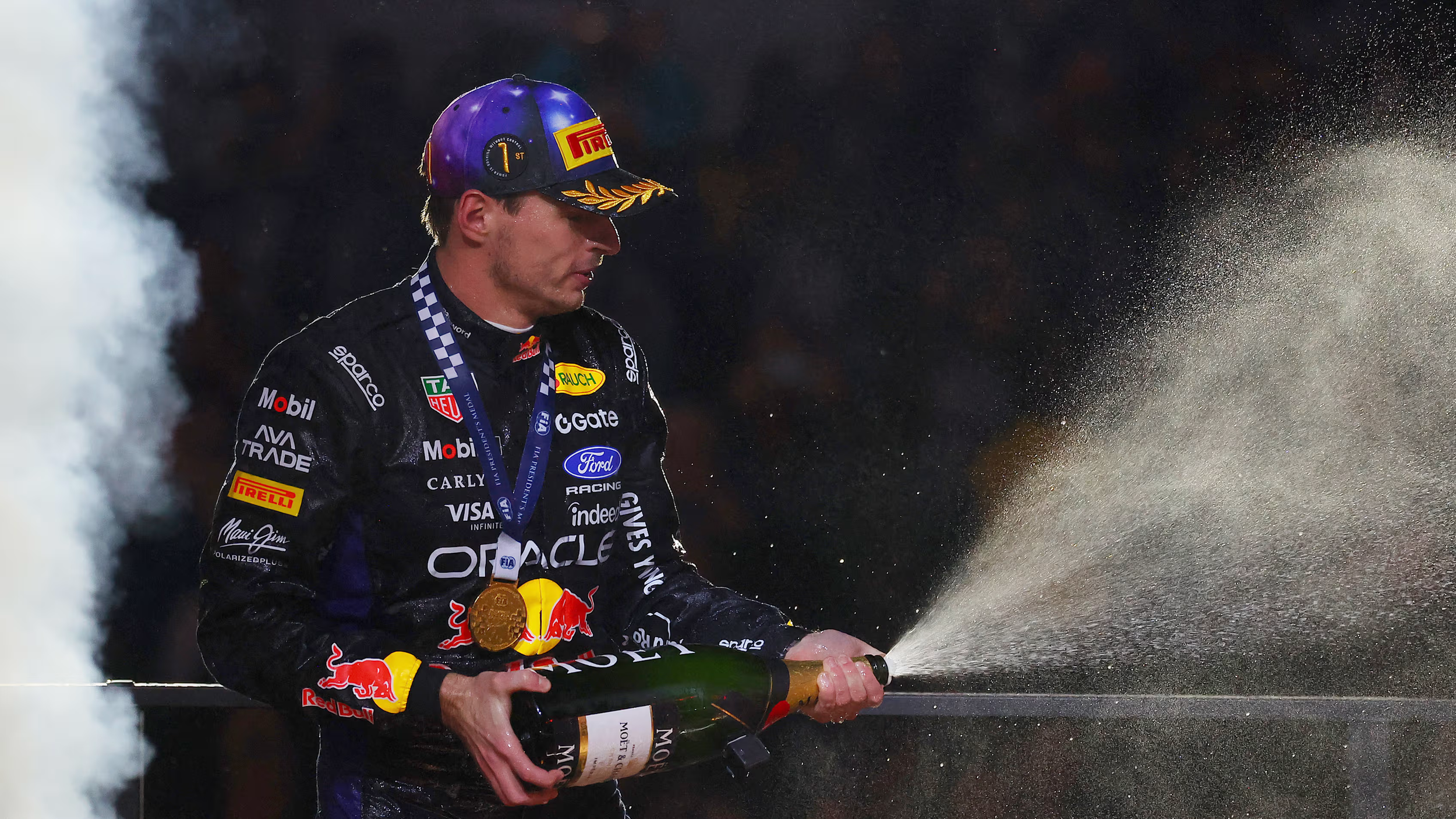
It was his third Las Vegas Grand Prix victory in four years.
More importantly, it was another reminder that his competitive relevance does not depend entirely on the championship standings.
I have always been fascinated by individuals who operate at the very highest level of their disciplines.
Not simply because of what they achieve, but because of how they think, how they respond to adversity and what they are prepared to demand of themselves.
Verstappen belongs to that category.
His approach to racing reveals something fundamental about the nature of excellence: extraordinary performance is rarely the product of talent alone. It requires a combination of instinct, preparation, technical understanding and an almost unreasonable determination to keep improving.
It also requires the ability to remain effective when circumstances refuse to cooperate.
That, to me, is the Verstappen Principle.
The refusal to mistake temporary disadvantage for permanent defeat. The discipline to remain precise under pressure. The conviction to challenge what others have already accepted as the limit.
And perhaps, above all, the understanding that greatness is not measured exclusively by the occasions on which everything goes according to plan.
Sometimes, it is revealed most clearly when nothing does.
At 5:30 on a Sunday morning, I had set my alarm to watch a Formula 1 race.
I finished watching with another reminder of why I consider Max Verstappen one of the greatest racing drivers the sport has ever produced.
Not simply because he wins.
But because of the extraordinary way he refuses to lose.
Image credits Formula1.com