Luxury's Centre of Gravity Is Moving
At BoF Crossroads in Dubai, a conversation about the Global South became something more personal: a reflection on where luxury's next ideas, businesses and cultural influence will come from.
In September 2024, Bungalow 28 became a listed organisation on The Business of Fashion. For an independent company I had built from Cyprus, it was a small line on a page that carried considerably more meaning to me than its size suggested.
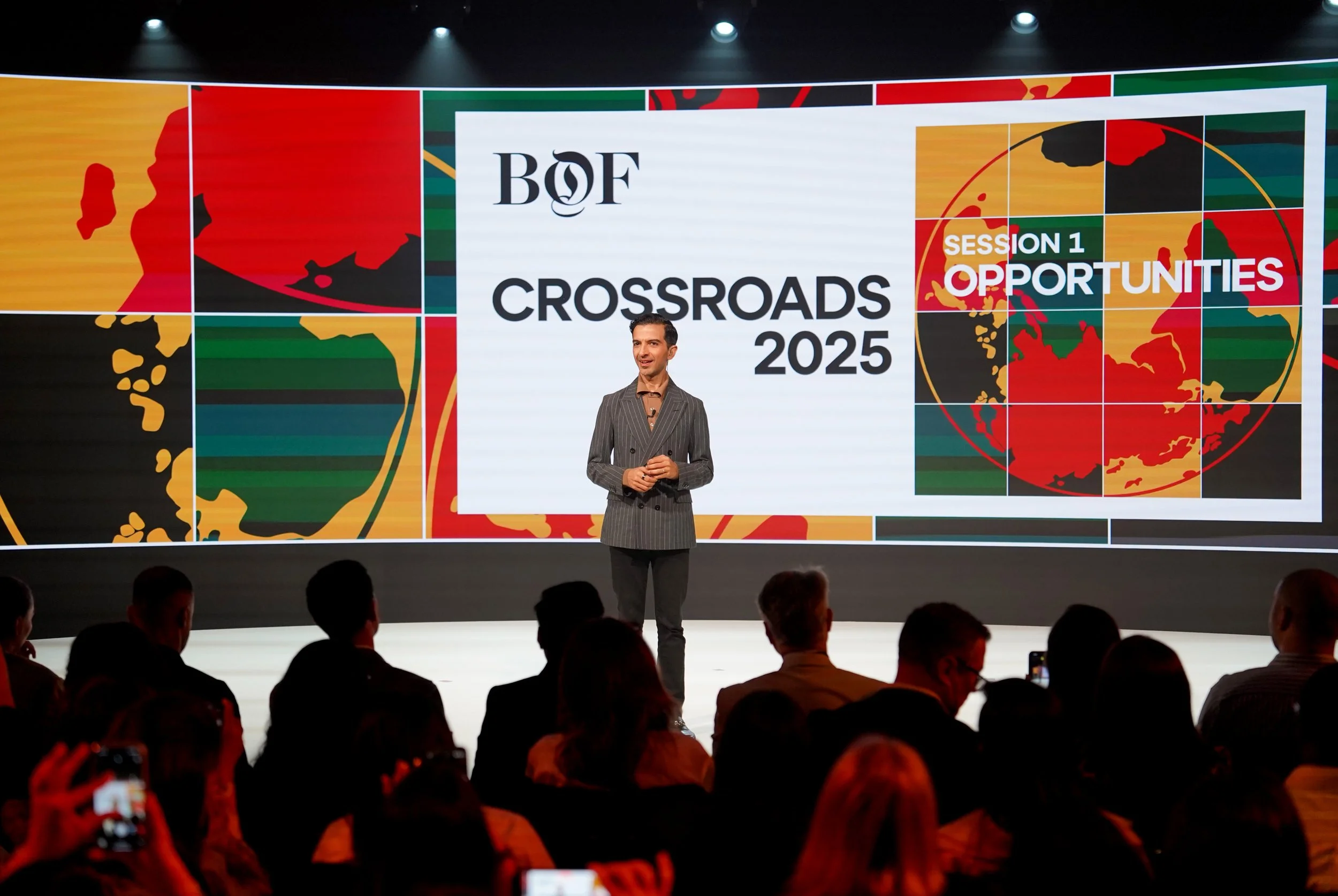
Six months later, I found myself in Dubai for BoF Crossroads, surrounded by founders, designers, investors and executives from across fashion, luxury and beauty.
There are professional moments that feel significant because of what happens in the room. Others matter because they allow you, briefly, to look backwards.
For me, Crossroads was both.
I had followed The Business of Fashion for years, long before Bungalow had an international client base or I could reasonably imagine myself participating in one of its gatherings. Sitting there as a founder — listening to conversations about markets in which I now work, travel and build — gave the experience a personal significance I hadn't anticipated.
But what stayed with me afterwards was not the sense of arrival.
It was the direction in which the industry appeared to be moving.
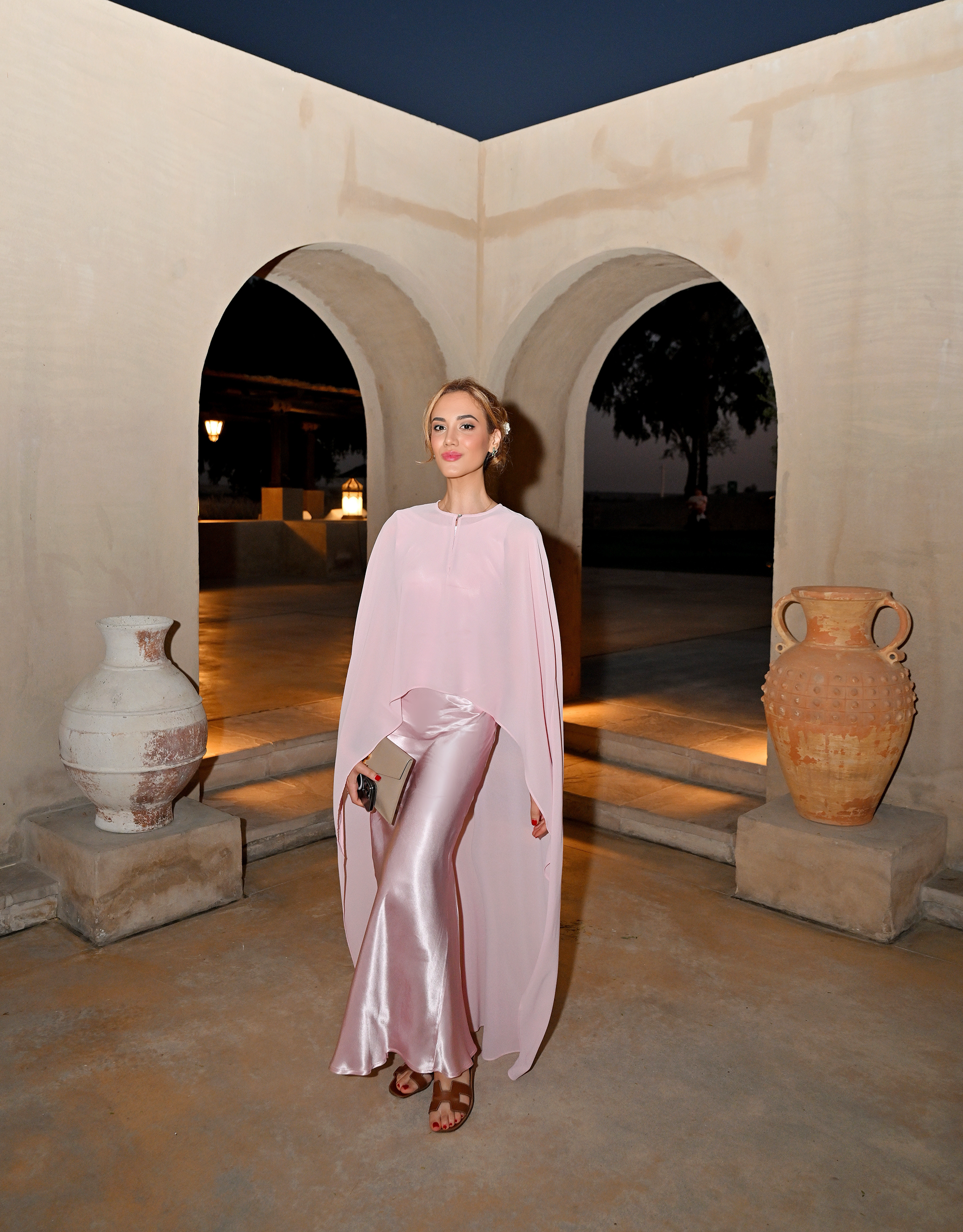
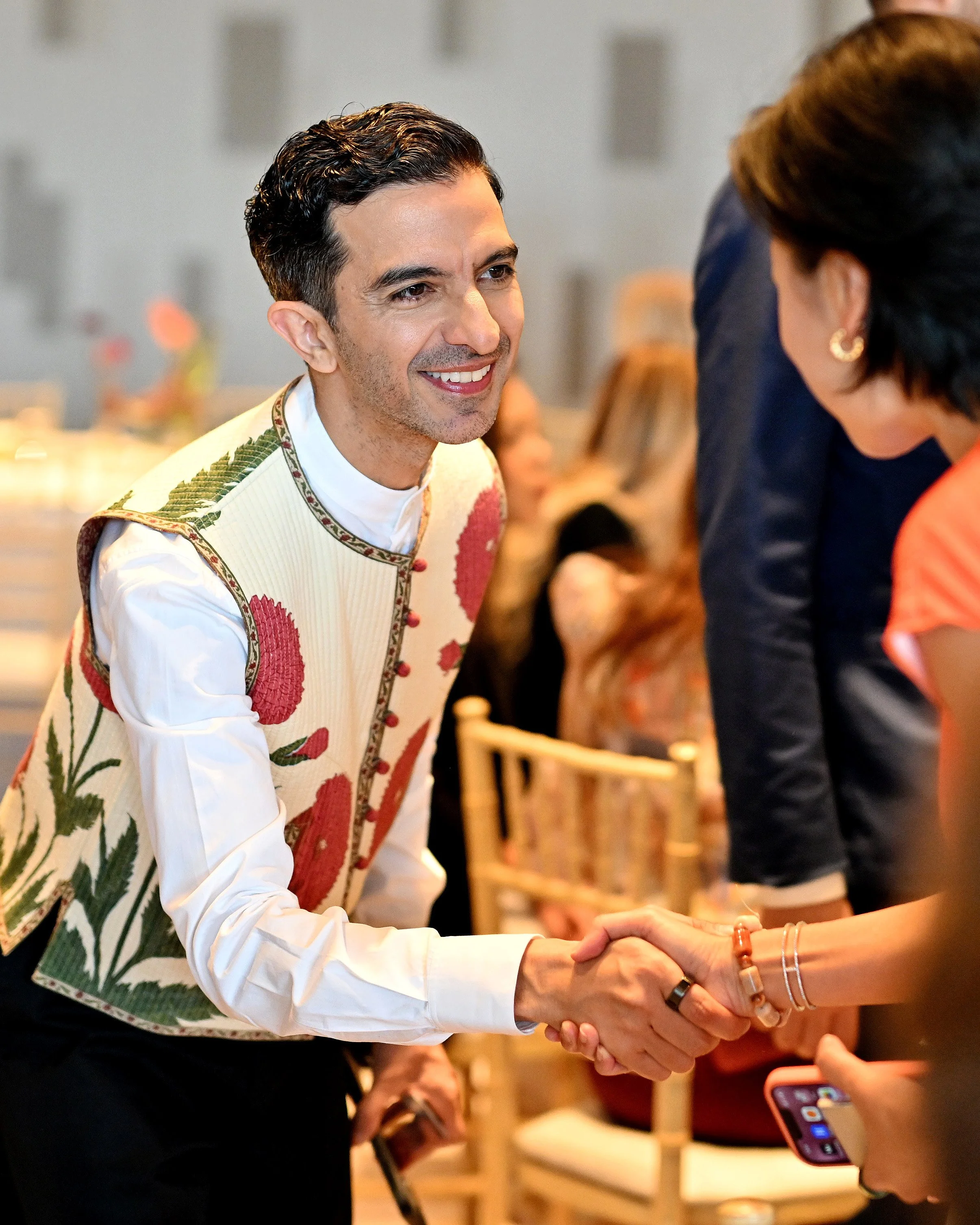
Evangelina photographed by Getty Images for The Business of Fashion
A DIFFERENT MAP OF LUXURY
For much of modern luxury's history, influence travelled along relatively established routes.
Europe created many of the industry's dominant codes. Paris and Milan functioned as creative capitals; London and New York as powerful centres of commerce, media and culture. Markets elsewhere were frequently discussed through another lens: growth.
How large is the opportunity in India? How quickly is luxury consumption developing in the Gulf? Which Southeast Asian market comes next?
At Crossroads, that vocabulary felt increasingly inadequate. As BoF founder Imran Amed observed during the gathering, “The Global South is the global majority.”
The distinction matters. Because what is happening across these markets is no longer simply a story about where the next luxury consumer will come from. It is increasingly about where culture, creativity, capital and new models of business are being produced.
That changes the question entirely.
FROM CONSUMPTION TO CULTURAL AUTHORITY
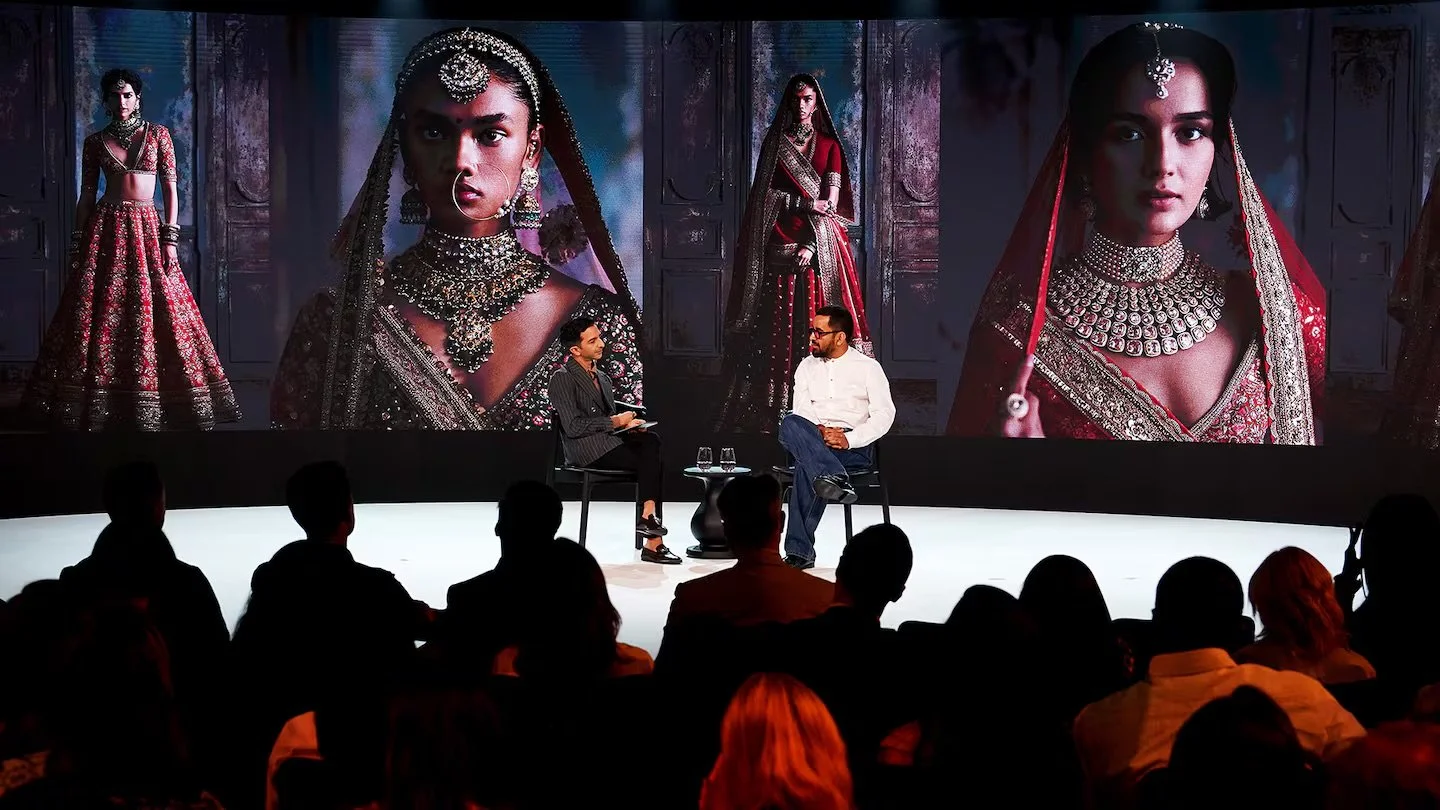
Sabyasachi Mukherjee offered perhaps one of the clearest examples.
His global success has not depended on sanding away the cultural specificity of his work to make it more legible to Western luxury consumers. Indian craftsmanship, history and identity are not decorative references around the brand. They are fundamental to its value.
There is an important lesson here.
For decades, globalisation encouraged brands to pursue a particular kind of universality. But the next era of global relevance may depend on something almost opposite: being culturally specific enough to become globally distinctive.
Saudi Arabia presents another manifestation of the shift.
Princess Noura Bint Faisal Al Saud spoke about the Kingdom's cultural development within Vision 2030 and the role heritage can play in building a contemporary creative economy. Here again, heritage is not being treated simply as something to preserve. It is becoming infrastructure for what comes next.
The same confidence can be felt across the Gulf.
THE GULF IS BUILDING ITS OWN MODEL
Having worked increasingly across the Middle East, I have become particularly interested in the speed at which the region is developing its own language around luxury.
The temptation from outside is to explain the Gulf primarily through purchasing power.
That misses much of what is happening.
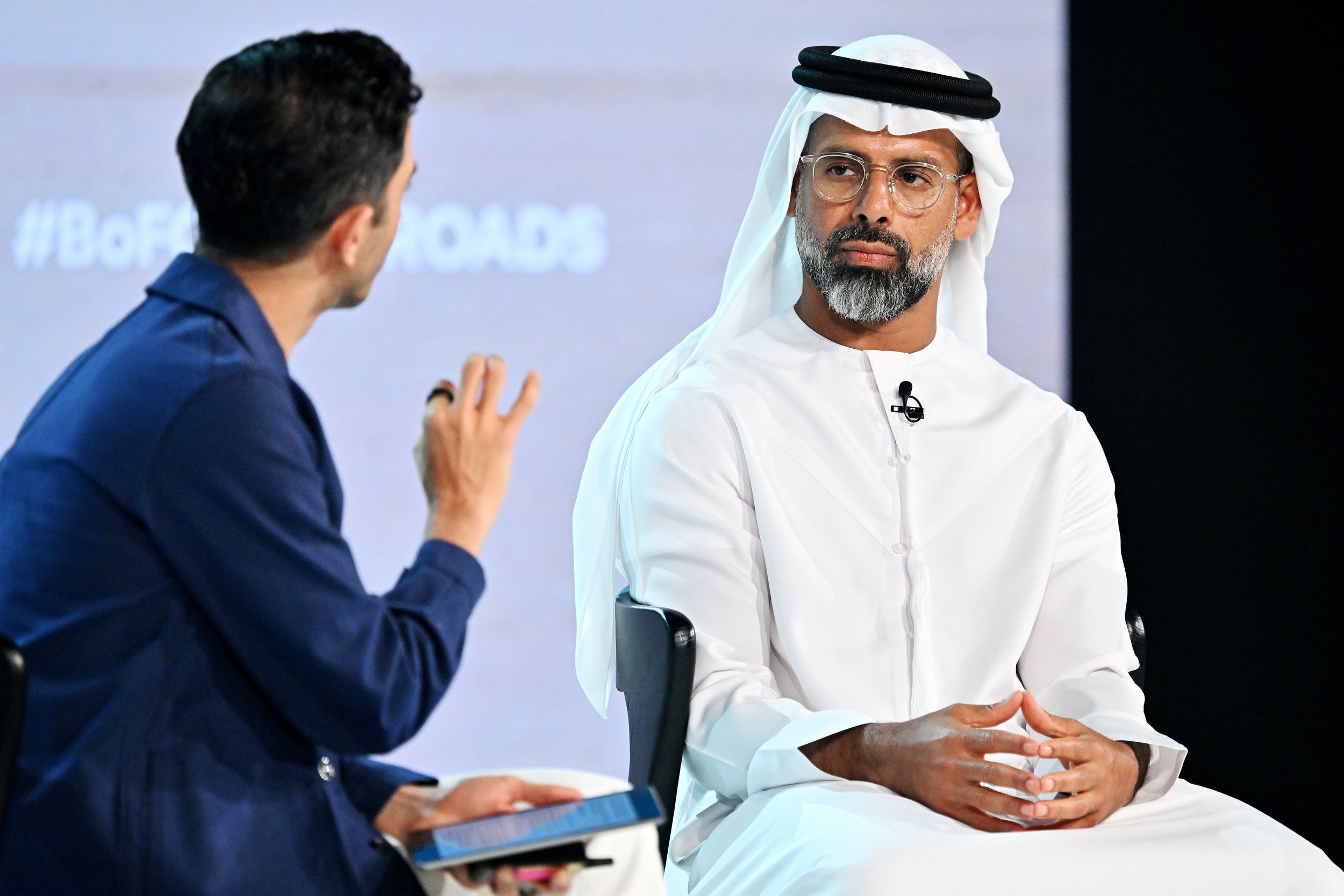
In conversation with Imran Amed, Ounass CEO Khalid Al Tayer illustrated how sophisticated the region's luxury ecosystem has become. The platform combines e-commerce, logistics, global brand relationships and increasingly ambitious physical activations — creating an experience shaped specifically around how consumers in the GCC discover and engage with luxury.
Anas Bukhash's discussion of Dubai's creator economy pointed towards another part of the same infrastructure: media and cultural influence are increasingly being generated locally rather than imported wholesale from established Western centres.
The Gulf is not simply becoming a larger destination for international luxury.
It is becoming one of the places redefining how luxury is distributed, experienced and communicated.
INDIA CHANGED THE WAY I SEE THIS
Perhaps inevitably, much of the conversation brought me back to India.
I have been travelling there for close to a decade, often several times a year. What began partly through production and my work building Tallulah developed into a much deeper relationship with the country — its craftsmanship, cities, hospitality, creative communities and contradictions. It has influenced how I think about business, creativity and luxury more profoundly than I probably realised at the beginning.
And over those years, I have watched the conversation around India change.
The international luxury industry has long understood the country's demographic and economic potential. But reducing India to the size of its future consumer class misses what makes this moment particularly interesting.
India is not simply becoming more important because more Indians can buy luxury. It is becoming more important because Indian creativity itself is acquiring greater global authority.
LISTENING BEFORE ENTERING
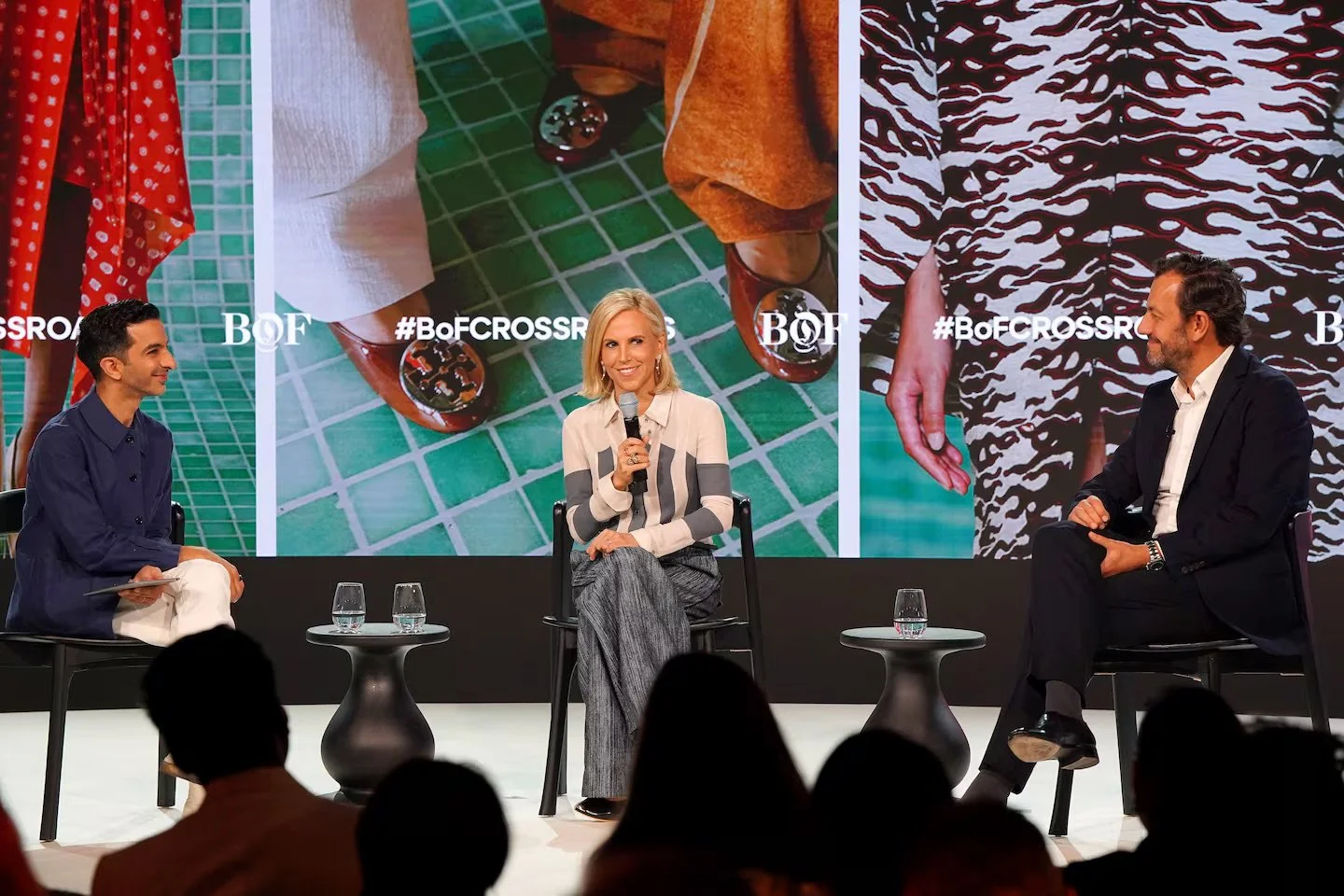
Tory Burch and Pierre-Yves Roussel brought the discussion back to one of the practical challenges facing global brands: how to participate in these markets without assuming that a successful model can simply be exported.
Their emphasis on listening — understanding local traditions, behaviour and expectations before attempting to scale — sounds elementary.
In practice, many global brands still struggle with it.
Localisation is too often treated as the final layer of an international strategy: adapt the campaign, select the right ambassador, translate the message. But genuine cultural relevance begins much earlier.
It influences product, partnerships, distribution, experience, communication and sometimes the assumptions on which the strategy itself was built.
The companies that understand this will not simply sell into new markets.
They will allow those markets to change them.
I left Dubai thinking about maps.
Not geographical ones, exactly, but the invisible map the luxury industry has used for decades to determine where authority sits: where ideas originate, where brands are built, where culture is legitimised and where consumers wait to receive it.
That map is being redrawn. The next chapter of luxury will not be about replacing Paris with Dubai, Milan with Mumbai or New York with Riyadh. Doing so would merely reproduce an old hierarchy with different names.
What is emerging is considerably more interesting: a multipolar luxury economy in which creativity, capital, technology and cultural influence travel in several directions at once.
For me, there was something fitting about contemplating that shift at Crossroads. I arrived in Dubai proud of how far my own company had travelled since appearing on BoF's platform six months earlier.
I left thinking much less about arrival than about where the world is going next.
Images courtesy of The Business of Fashion