The Risk of Judging Talent Too Soon
Kimi Antonelli, Pierre Gasly and what Monza taught us about underestimated capability.
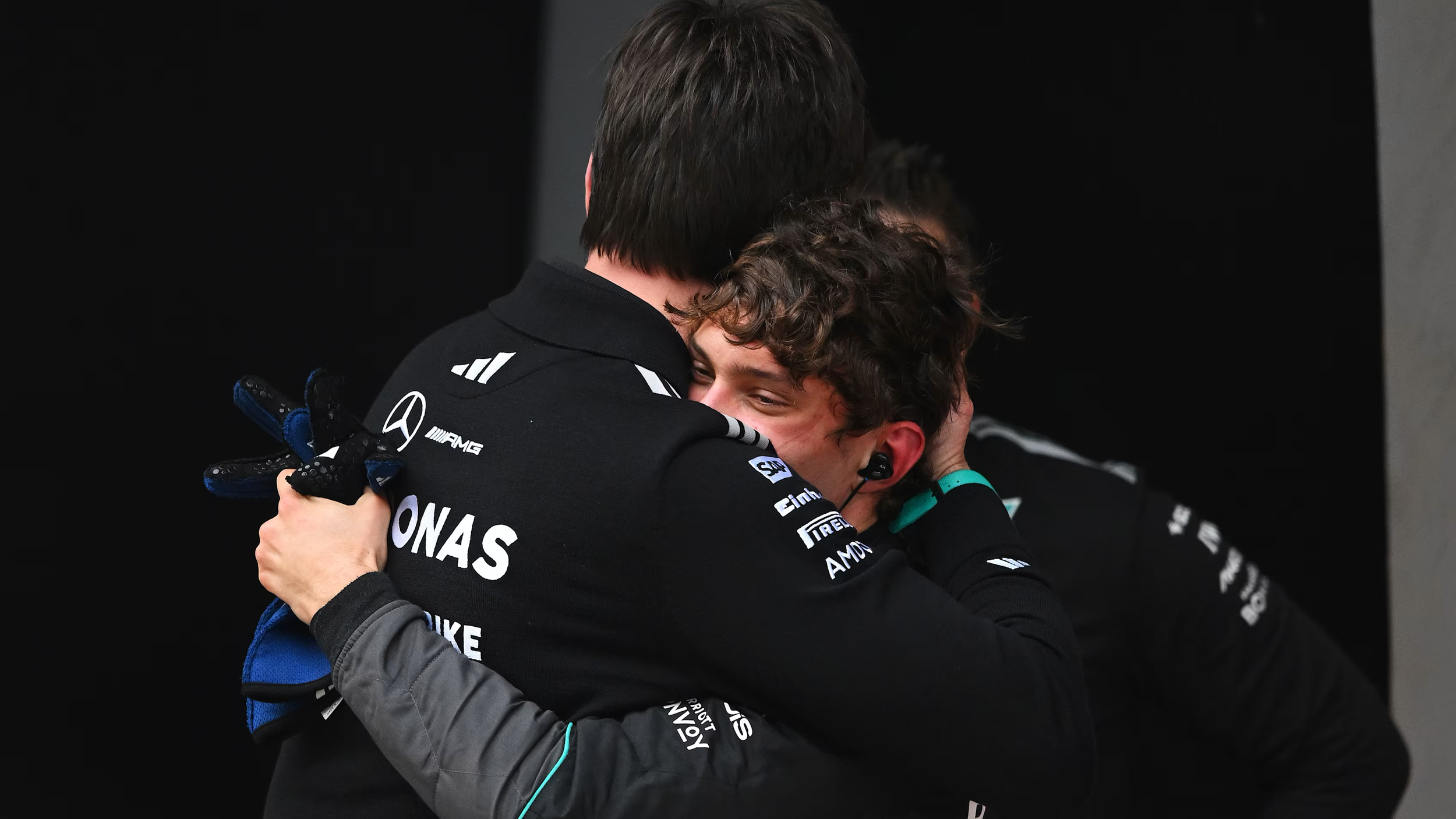
I like to imagine that I watch Formula 1 with the elegance and composure expected of a grown woman. In my head, I am sitting somewhere, calmly analysing race strategy, performance and tyre degradation. In reality, I alternate between Toto Wolff breaking a headset and being momentarily distracted by the suspicious number of extremely good-looking men on the grid.
Monza definitely did not help my blood pressure.
By the end of Sunday’s Italian Grand Prix, Charles Leclerc had crashed heavily, Kimi Antonelli had somehow gone from 19th on the grid to winning his home race, Max Verstappen had fought his way onto the podium — after complaining all weekend that he had less power than a Fiat Punto — and Pierre Gasly — who less than 24 hours earlier had put an Alpine on pole — finished seventh. It was chaotic. It was brilliant. It was Formula 1.
And somewhere between Saturday afternoon and Sunday evening, I found myself thinking about something that has very little to do with motorsport: how quickly we mistake results for definitive assessments of ability.
I am, admittedly, a Max Verstappen fan. This is hardly classified information. But when Pierre Gasly took pole on Saturday, it was impossible not to appreciate what he had just done. Some performances command respect regardless of who you came to the race supporting.
There is something irresistible about watching somebody outperform what everyone assumes is possible. Gasly hadn’t suddenly become a better driver on Saturday afternoon. For one qualifying session at Monza, however, he produced a performance that made his capability impossible to overlook.
And lately, Gasly’s results have had a slightly complicated relationship with reality.
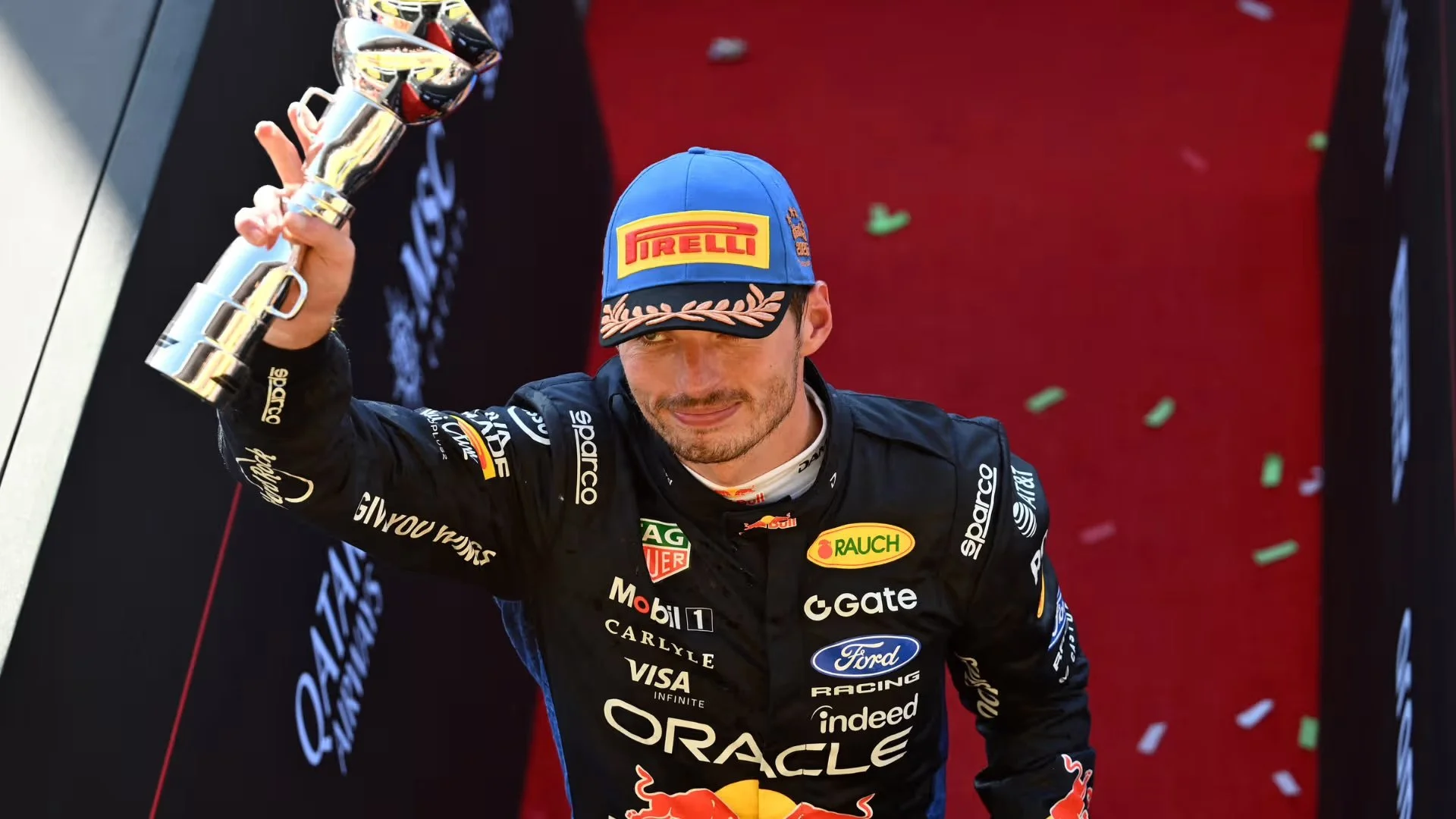
I was in Monaco earlier this year when Isack Hadjar stood on the podium in third. Gasly had actually crossed the line P3, but two five-second penalties for pit-lane speeding dropped him to seventh after the race. Alpine challenged the decision. The penalties were subsequently rescinded and Gasly was reinstated to third — which meant, rather unusually, that Hadjar eventually had to hand the trophy over.
You would think that would be the end of it. This is Formula 1.
McLaren and Red Bull appealed the decision. Months later, just before Monza, the FIA’s International Court of Appeal upheld their appeals and reinstated Gasly’s penalties. The trophy went back to Hadjar.
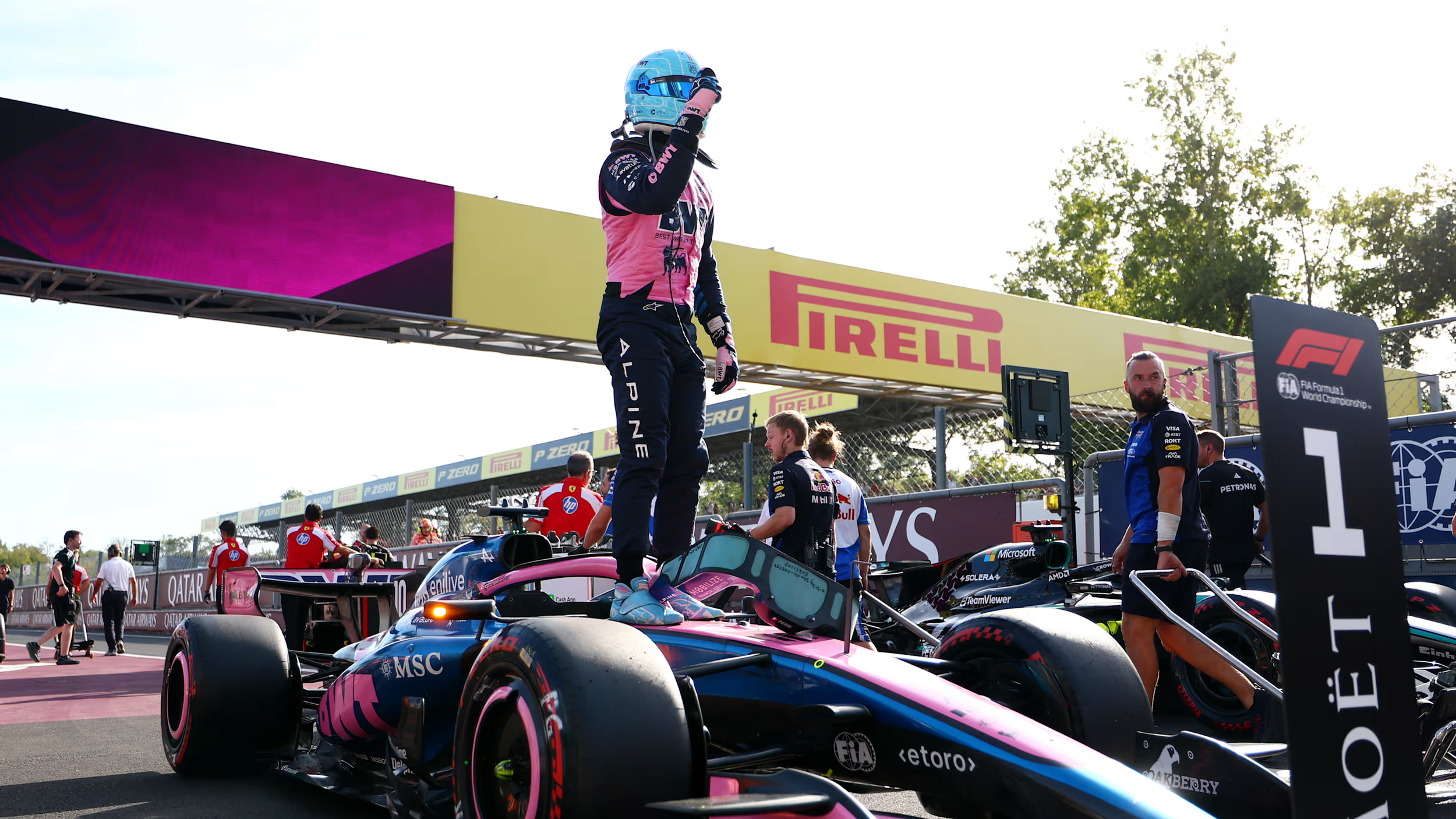
Then Gasly arrived at Monza and put the Alpine on pole. There was something wonderfully defiant about it. No appeals. No retrospective classification. No trophy being passed around Europe. Just one driver, one car and the fastest qualifying time.
Then came Sunday. Gasly finished seventh.
If this were a conventional underdog story, this is where the narrative would become inconvenient. We like resilience stories with tidy endings: the underestimated person proves everyone wrong, wins the race, lifts the trophy and gives us a conclusion that feels satisfyingly complete.
Real life is usually less cooperative.
Gasly didn’t win. But does finishing seventh on Sunday somehow make what he did on Saturday less extraordinary? Of course not.
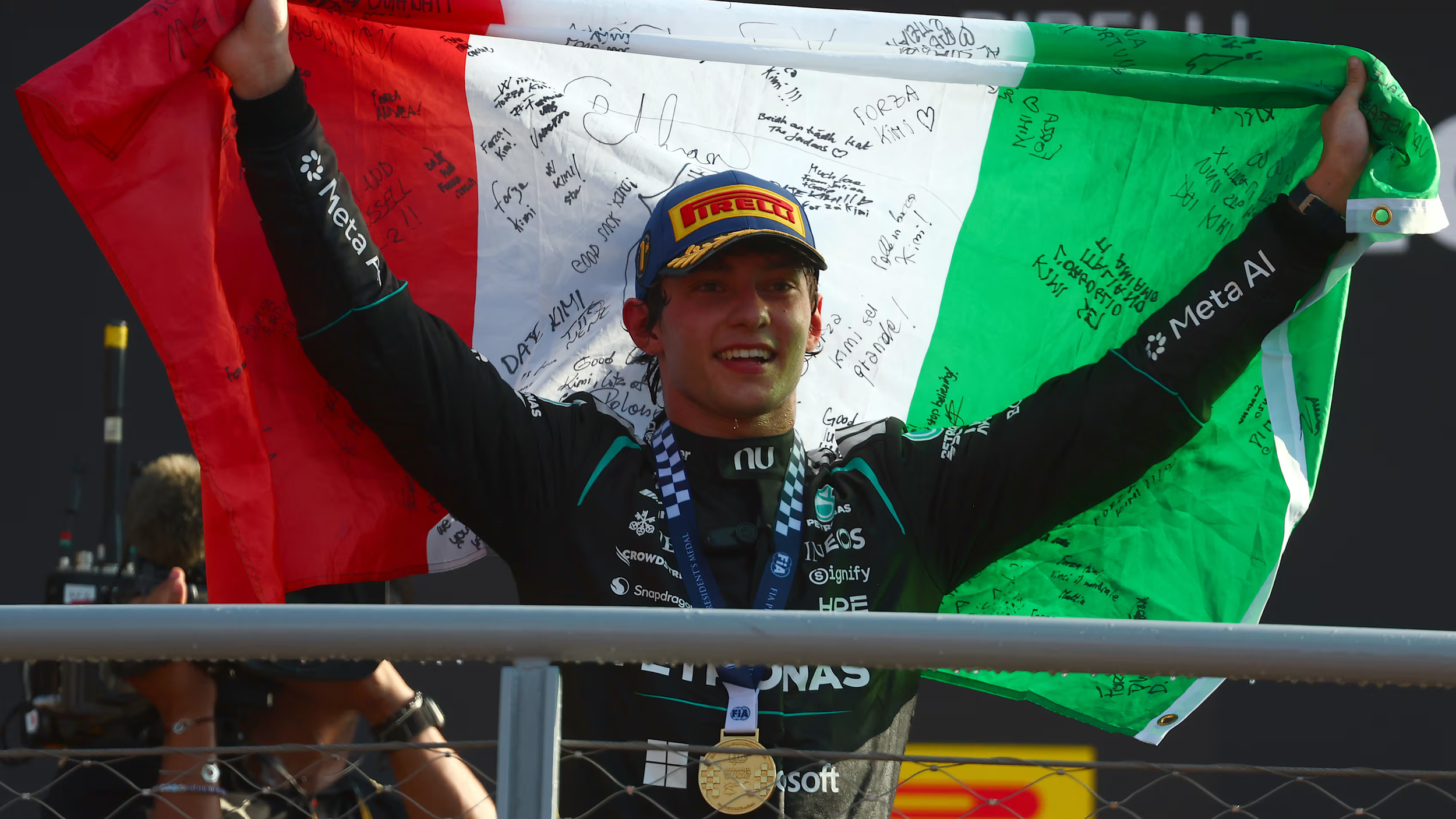
And then, on the other side of the grid, there was Kimi Antonelli. He had turned 20 only days before Monza. Twenty. When Mercedes decided to put Antonelli into one of the most scrutinised seats in motorsport, there was no shortage of commentary about his age and whether Toto Wolff was asking too much, too soon, of someone so young. Apparently being 20 is old enough to win at Monza but still young enough for the internet to explain to Toto Wolff how talent development works.
On Sunday, Antonelli started 19th after an engine penalty. He won. At home. In a Mercedes. In front of Monza.
Gasly started first and finished seventh. Antonelli started nineteenth and finished first, completing 26 overtakes on the way. By the time Leclerc’s crash brought out the red flag, Kimi had already cut through the field; after the restart, he continued to climb, eventually catching and passing George Russell for the win. If you had looked at the starting grid and treated it as a definitive statement of their respective capabilities, you would have misunderstood both of them.
And that is what I find so interesting. We are obsessed with results because results are easy to understand: first or seventh, won or lost, promoted or rejected, revenue up or revenue down, client won or client lost, success or failure. Numbers give us certainty. They allow us to rank things, compare things and decide very quickly who is doing well.
I love numbers. I would be the last person to argue that results don’t matter. They matter enormously. But they don’t always tell the whole truth.
I’ve seen this repeatedly in business. You can deliver an excellent pitch and lose the account. You can build the better product and arrive at the wrong moment. You can make the right decision and still experience a bad outcome. A campaign can underperform despite containing the seed of a very good idea. And somebody can spend years looking relatively ordinary because the circumstances around them have never allowed their ability to become fully visible.
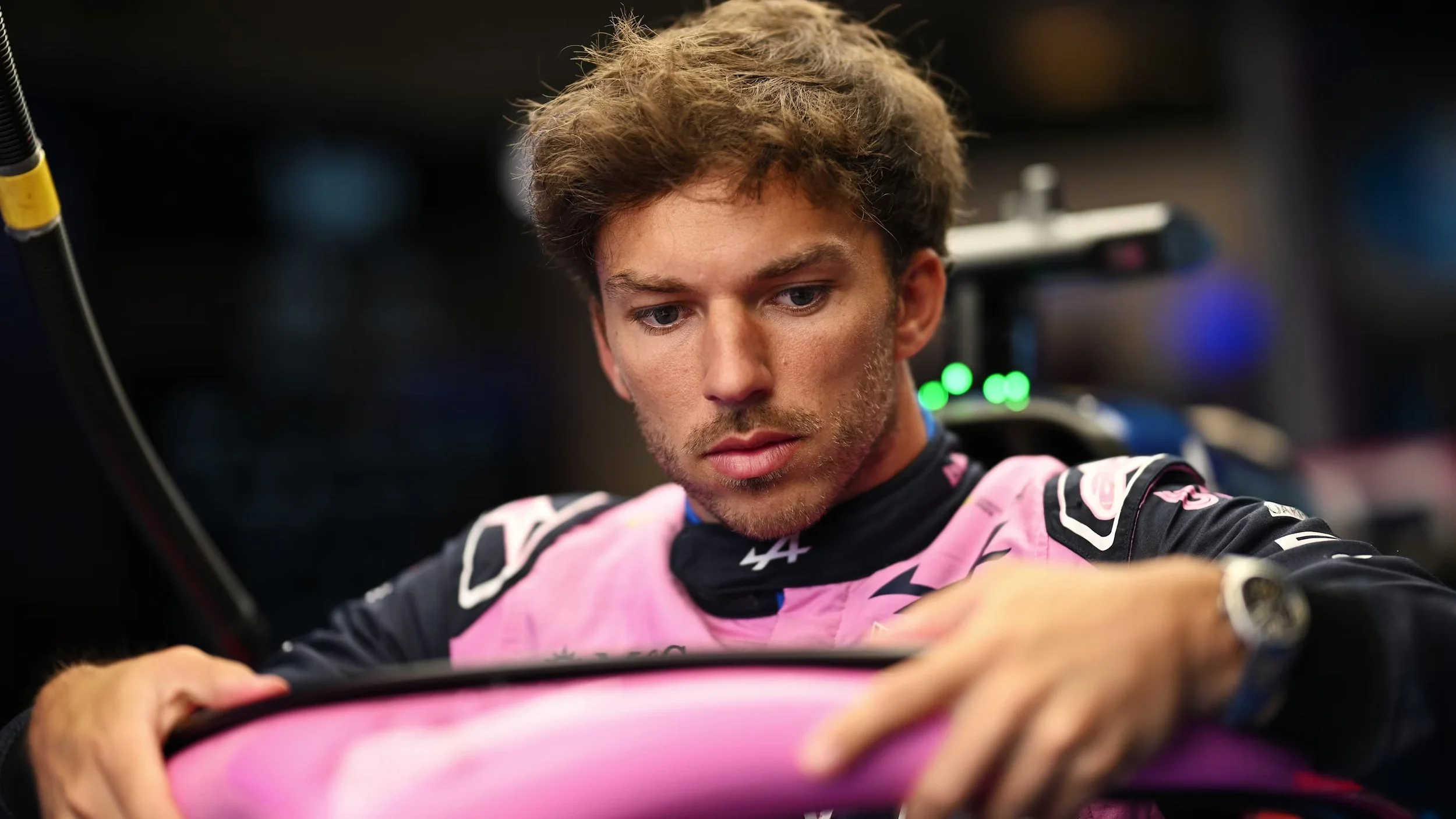
The reverse is also true. One spectacular result doesn’t suddenly make somebody brilliant. Antonelli did not acquire the ability to win a Grand Prix somewhere between Saturday night and Sunday afternoon. The capability was already there. On Sunday, he demonstrated it emphatically — turning a compromised starting position into an extraordinary result.
Performance and outcome are related. They are not identical.
That distinction becomes increasingly important the longer you spend building things. Sometimes you need to look beneath the result and ask better questions. Was the thinking right? Was the execution strong? What was within our control, and what wasn’t? Is this a capability problem, or a circumstance problem?
Because if you mistake a temporary result for a permanent assessment of ability, you can make some very expensive decisions. You can give up on a good idea too early, underestimate someone who simply hasn’t had their moment yet, decide you’re bad at something because the first attempt failed, or walk away from a strategy that was fundamentally right because the immediate outcome wasn’t.
And perhaps most dangerously, you can allow other people’s assessment of your current position to become your assessment of your potential.
Formula 1 makes this unusually visible because the variables are impossible to ignore. The driver matters, but so does the car. So do strategy, reliability, tyres, timing, weather, traffic, a safety car, a penalty, a fraction of a second — and, apparently, sometimes even an appeals court.
Business isn’t particularly different. Talent matters enormously, but so do capital, timing, teams, markets, access, opportunity and luck. The trick is learning not to confuse the conditions surrounding somebody with the limits of what they can become.
On Sunday evening, the classification said Kimi Antonelli: first. Pierre Gasly: seventh. Both results were real. But so was Gasly being the fastest Formula 1 driver around Monza on Saturday, and so was Antonelli starting Sunday’s race in nineteenth.
Perhaps that’s the uncomfortable thing about results. The scoreboard gives us an answer because we need one. First. Seventh. Winner. Loser. Growth. Decline. Success. Failure.
Numbers are very good at telling us what happened. They are not always very good at telling us who is capable of what.
Images courtesy of Formula1.com